When choosing a new gaming monitor, the biggest decision often comes down to the panel type. IPS, VA, and TN are the three most common technologies, and each one affects color quality, speed, brightness, and overall gaming experience. Although they may look similar on the outside, the internal panel technology can completely change how your games feel. In this guide, you’ll learn the key differences between IPS, VA, and TN, along with which one you should choose for your setup.
What Are Monitor Panel Types?
Before diving in, it’s important to understand that panel types control how pixels create color and respond to movement. Therefore, choosing the right panel determines whether you get smoother motion, deeper contrast, or better color accuracy. As gaming evolves and titles become more visually demanding, panel type matters even more.
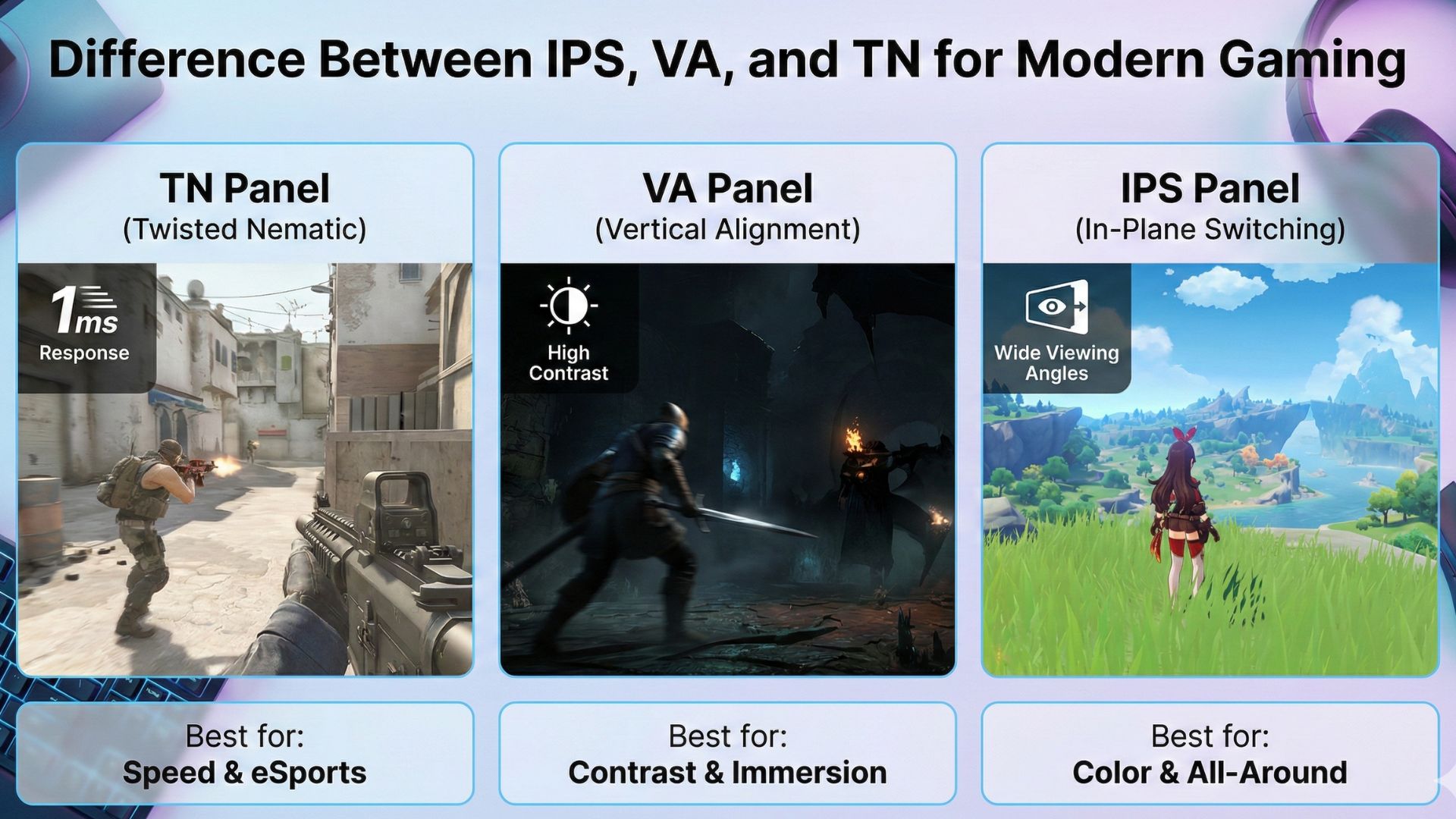
IPS Panels Best for Color & Viewing Angles
IPS stands for In-Plane Switching, and it’s widely considered the most balanced option for modern gaming.
Key Advantages
- Excellent color accuracy – ideal for games with rich environments.
- Wide viewing angles – colors don’t shift when you look from the side.
- Great for mixed use like gaming + content creation.
Downsides
- Lower contrast compared to VA panels.
- Higher price than TN.
- Can have IPS glow in dark scenes.
Best For
Gamers who want beautiful visuals, open-world titles, RPGs, single-player adventures, or anyone who values accuracy over pure speed.
VA Panels – Best for Contrast & Cinematic Games
VA stands for Vertical Alignment, and it offers the deepest contrast among all three panel types.
Key Advantages
- Superior contrast ratio – darker blacks, better night scenes.
- Great for movies and story-driven games.
- Modern VA panels now offer high refresh rates (144Hz–240Hz).
Downsides
- Slower response time than IPS and TN.
- Can show ghosting in fast-paced shooters.
Best For
Gamers who love cinematic experiences, racing games, RPGs, and play mostly in dark rooms.
TN Panels – Best for Speed & Competitive Gaming
TN stands for Twisted Nematic, and it’s the oldest technology, but still trusted for one main reason: speed.
Key Advantages
- Fastest response times – extremely low latency.
- Very high refresh rates (240Hz–360Hz).
- Usually budget-friendly.
Downsides
- Worst color accuracy among the three.
- Poor viewing angles.
- Can look washed out compared to IPS and VA.
Best For
Competitive FPS players who prioritize speed over visuals, such as CS2, Apex Legends, and Fortnite users.
Side-by-Side Comparison Table
| Feature | IPS | VA | TN |
|---|---|---|---|
| Color Accuracy | ★★★★★ | ★★★★ | ★★ |
| Contrast | ★★★ | ★★★★★ | ★★ |
| Viewing Angles | ★★★★★ | ★★★ | ★ |
| Response Time | ★★★★ | ★★★ | ★★★★★ |
| Price | Mid-High | Mid | Low |
| Best For | Visual quality | Cinematic gaming | Competitive gaming |
Which Panel Should You Choose?
IPS If:
- You love vibrant, accurate colors
- You play a mix of genres
- You want the most balanced performance
VA If:
- You prefer deep blacks and high contrast
- You mainly play cinematic or slower-paced games
- You often game in low-light rooms
TN If:
- You play competitive shooters
- You want the fastest response time
- You need a budget gaming monitor
Final Thoughts
Choosing between IPS, VA, and TN depends on your gaming style, not just the specs. IPS offers the best visuals, VA gives you the richest contrast, and TN delivers pro-level speed. As gaming technology continues to evolve, IPS and VA are becoming the most popular options, however, TN still remains a favourite in the esports scene.
By understanding how each panel behaves, you can finally pick a monitor that complements your gameplay and enhances your setup.