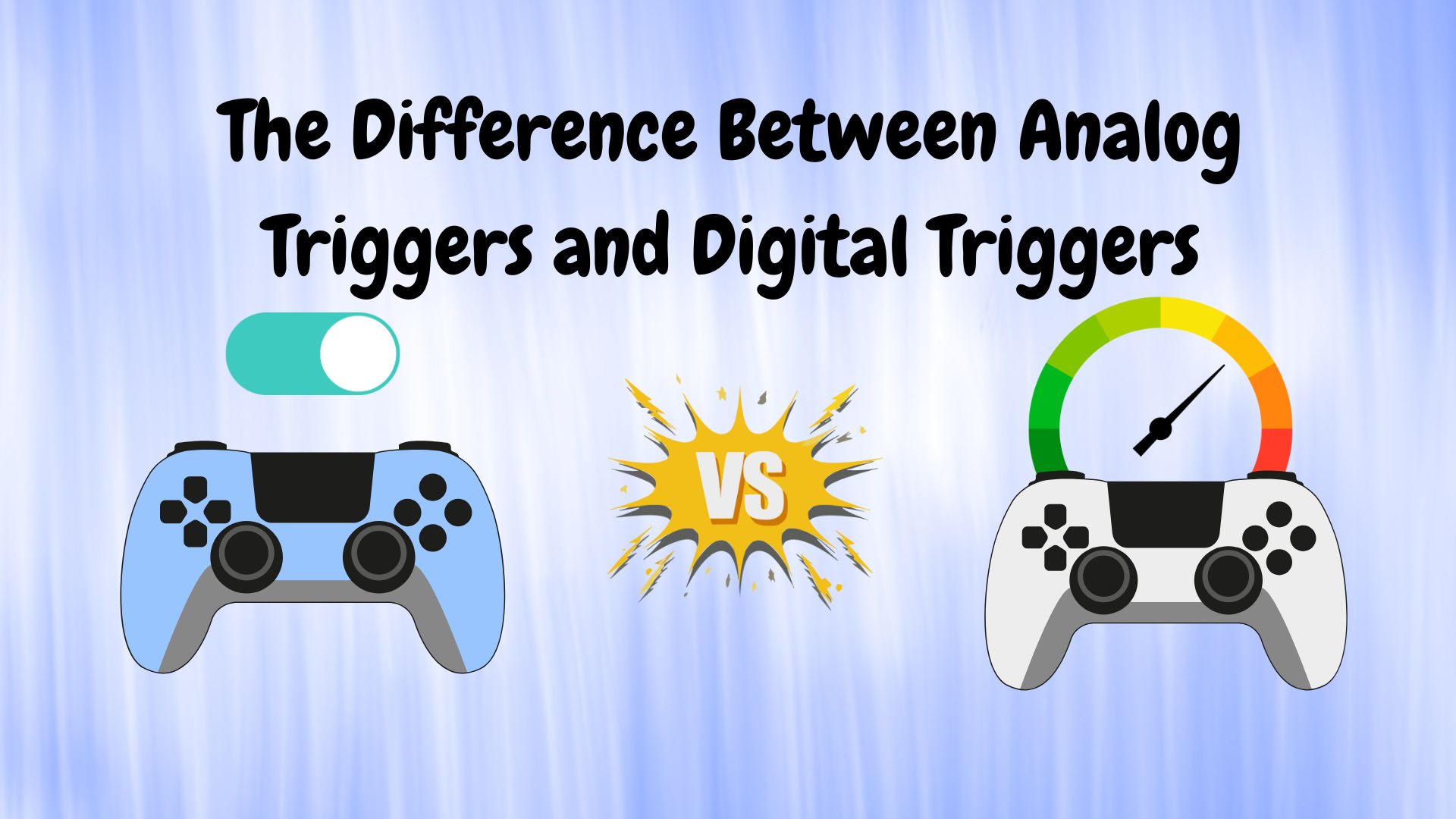
Modern controllers come with different types of triggers, and the two most common ones are analog triggers and digital triggers. Although they may look similar, they behave differently.
Therefore, understanding how each trigger works can help you choose the best controller for your gaming style.
What Are Digital Triggers?
Digital triggers function like simple on/off buttons. In other words, they register input instantly without detecting how hard you press them.
How They Work
- When you press them, they instantly register as fully pressed.
- There are no pressure levels: it’s either ‘not pressed’ or ‘pressed’.
Where You’ll Find Them
- Most older controllers
- Budget-friendly Android controllers
- Controllers designed for fast-paced games, like fighters and retro titles
Ideal For
- Fighting games
- Platformers
- Rhythm games
- Competitive shooters that need quick tap firing
Why players like them:
Digital triggers offer instant response. Additionally, there is no delay caused by pressure detection, which makes them perfect for fast-reaction gameplay.
What Are Analog Triggers?
Analog triggers are a more advanced type of input. Unlike digital triggers, they measure how far or how softly you press them.
How They Work
- They measure different pressure levels (e.g., 0% to 100%).
- You can press lightly, half, or fully, and your game responds to the exact amount.
Where You’ll Find Them
- Xbox controllers
- PlayStation controllers (DualShock & DualSense)
- High-end mobile/PC controllers
- Racing wheels and flight controllers
Ideal For
- Racing games (control acceleration/braking gradually)
- Shooters (half-pull to aim, full-pull to fire)
- Simulation games
- Driving and flying games
Why players like them:
Analog triggers provide precision and fine control. Moreover, they make gameplay feel more realistic, especially in racing or simulation titles.
Analog Triggers vs Digital Triggers: Key Differences
Although both types act as triggers, their functionality is quite different. Therefore, choosing the right one can significantly improve your gameplay.
| Feature | Analog Triggers | Digital Triggers |
|---|---|---|
| Input Type | Pressure-sensitive | On/Off |
| Control | Smooth & gradual | Instant |
| Best for | Racing, simulation, shooters | Fighting, platformers, rhythm |
| Complexity | More advanced | Very Simple |
| Response Time | Slightly slower | Extremely fast |
Which One Should You Choose?
Choose Analog Triggers If You Want:
- More control in racing or driving
- Smooth aim adjustments
- Realistic gameplay feedback
- Better immersion in story/simulation games
Choose Digital Triggers If You Want:
- Fast reaction time
- Simplicity
- A competitive edge in tap-based shooters or fighting games
Game Compatibility Matters
Not all games support analog triggers. In fact, many Android games and some emulators treat analog triggers as digital inputs. Consequently, even if your controller has pressure-sensitive triggers, the game might only detect them as “on/off.”
Not sure which type your controller has? Open our Gamepad Tester and watch the trigger’s pressure reading: analog triggers move through a range, while digital triggers jump straight to full.
Final Thoughts
Analog and digital triggers each serve a different purpose. If you love precision, analog triggers are the better choice. However, if you prefer speed and simplicity, digital triggers will suit you more.
Ultimately, the best option varies based on the games you play and how you interact with them.